Undergraduate Programs
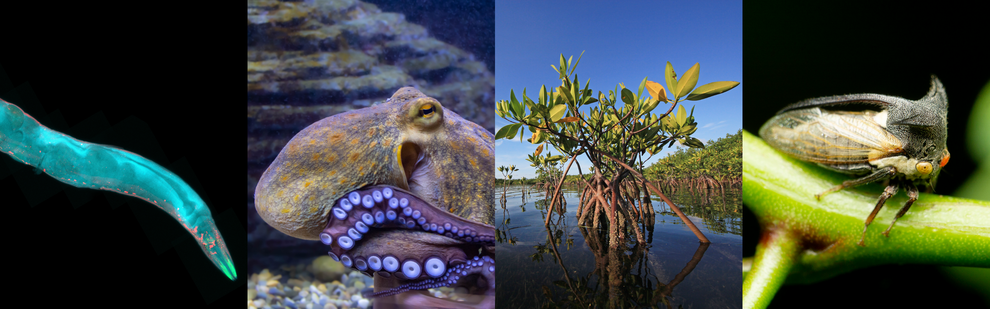
Biology offers many ways to explore the living world and address important challenges facing our communities and planet. At SFSU, you can choose from six undergraduate degree programs that provide a strong intellectual and practical foundation for careers in biology, graduate study, and professional programs.
Across our undergraduate programs, you can earn course credit through faculty-mentored research. In small, upper-division classes, you’ll develop practical skills and explore specialized topics in greater depth. Together, these experiences prepare you to enter the workforce or take your next educational step toward a fulfilling career.
Undergraduate Degrees
At SFSU, you can earn a Bachelor of Arts in General Biology or a Bachelor of Science in Biology.
Bachelor of Arts in General Biology
In General Biology, you’ll gain broad exposure to the fundamental areas of biology. This broad foundation can prepare you for a range of careers, graduate programs, and professional pathways.
B.A. General Biology
In General Biology, you’ll gain broad exposure to the fundamental areas of biology. You’ll also complete coursework in chemistry and physics, which provide an important foundation for understanding biological concepts.
Bachelor of Science in Biology
Choose one of five concentrations: Cell and Molecular Biology; Ecology, Evolution, and Conservation Biology; Marine Science; Microbiology; or Physiology. All five concentrations share 30 units of lower-division core requirements and two common upper-division requirements totaling 6 units. This shared foundation gives you room to explore different areas of biology. Learn more about the shared core requirements below.
B.S. Biology: Concentration in Cell and Molecular Biology
In Cell and Molecular Biology, you’ll explore how genes and biomolecules influence the behavior and health of eukaryotic cells, tissues, and organisms.
B.S. Biology: Concentration in Ecology, Evolution, and Conservation Biology
In Ecology, Evolution, and Conservation Biology, you’ll study organisms and their relationships with one another and the environment. You’ll build knowledge in ecology, evolution, natural history, and conservation biology through a flexible but rigorous course of study.
B.S. Biology: Concentration in Marine Science
In Marine Science, you’ll study marine environments and the organisms that live in them. You’ll have opportunities to explore the biology of oceans and coastal ecosystems through coursework and hands-on learning.
B.S. Biology: Concentration in Microbiology
In Microbiology, you’ll study bacteria, algae, protozoa, fungi, and viruses. You’ll explore their ecology, biochemistry, physiology, genetics, and roles in disease processes.
B.S. Biology: Concentration in Physiology
In Physiology, you’ll study how biological systems function in animals, including humans, and plants. You’ll build a foundation in the biological mechanisms that are central to the health and life sciences.
Shared Core Requirements for the B.S. Biology Degree
All five B.S. Biology concentrations share 30 units of lower-division core requirements and two common upper-division requirements totaling 6 units. This shared foundation gives you broad preparation across biology while leaving room to specialize through your chosen concentration.
- BIOL 230 — Introductory Biology I (5 units)
- BIOL 231 — Advising for Success as a Biology Major (1 unit)
- BIOL 240 — Introductory Biology II (5 units)
- CHEM 115 — General Chemistry I (4 units)
- CHEM 215 — General Chemistry II (4 units)
- MATH 226 — Calculus I (4 units)
Select one:
- CHEM 130 — General Organic Chemistry (3 units)
- CHEM 233 — Organic Chemistry I (3 units)
Select one:
- PHYS 111 and PHYS 112 — General Physics I and General Physics I Laboratory (4 units)
- PHYS 220 and PHYS 222 — General Physics with Calculus I and General Physics with Calculus I Laboratory (4 units)
Certificates and Minors
You can also expand your studies by adding a minor or certificate to your degree. Minors allow you to develop focused expertise in a particular field, while certificates bring together coursework around a broader interdisciplinary topic.
Minor in General Biology
In the Minor in General Biology, you’ll explore core biological concepts and systems, including genetics, evolution, chemistry, and how life works at different scales. You’ll develop laboratory and analytical skills while learning to evaluate the scientific process and the role of technology in society. This minor can complement any major and may be especially useful if you’re preparing for a health-related career or further study in the sciences.
Climate Change Certificate
In the Certificate in Climate Change Causes, Impacts, and Solutions, you’ll study the causes and effects of climate change and explore ways to take action in your community. You can pursue the certificate regardless of your major, and most courses have few or no prerequisites.
Visit Climate HQ to learn more about becoming a Climate Justice leader.
Promoting Inclusivity in Computing
Through Promoting Inclusivity in Computing (PINC), you can build computing, data science, and machine-learning skills alongside your studies in biology and other life sciences. Explore the Minor in Computing Applications, the Certificate in Data Science and Machine Learning for Biotechnology, and the PINC Summer Program to find the program that fits your goals.